
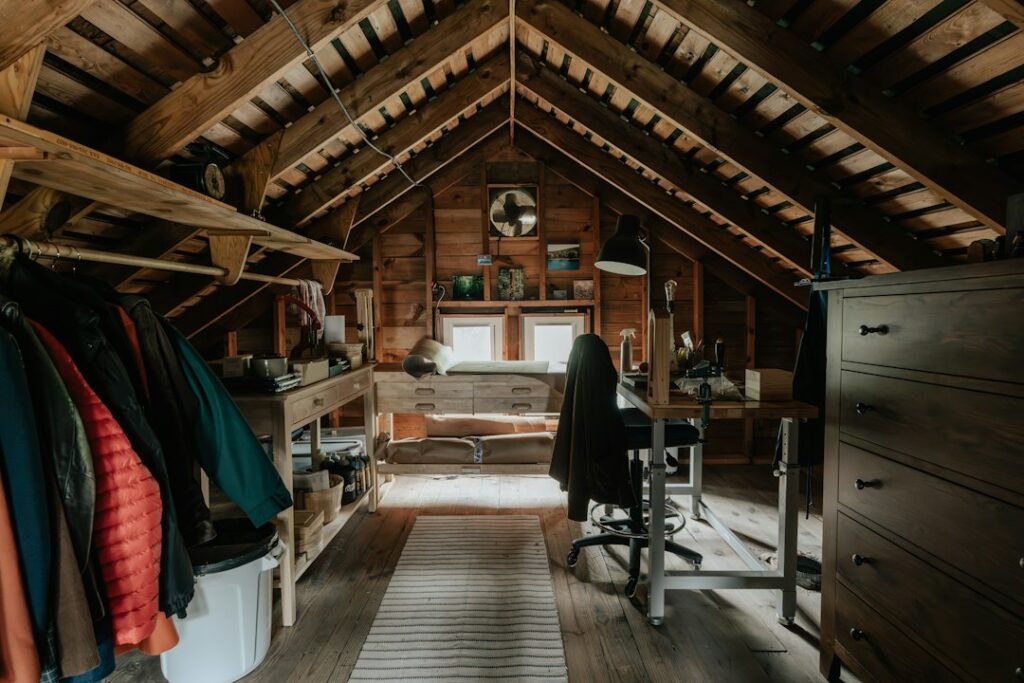
Holiday decorations can damage a roof even when they are stored indoors. Heavy boxes placed in an attic, damp decorations stacked against rafters, and leftover clips or wires attached to roof edges can all contribute to leaks, structural stress, mold, or premature wear.
In Little Falls, NY, winter storage deserves extra attention because cold temperatures, snow, ice, and freeze-thaw cycles can affect both the roof assembly and the items stored beneath it. A safe storage plan protects decorations while keeping roof coverings, gutters, attic insulation, and ventilation pathways undisturbed.
Is the attic a safe place to store holiday decorations?
An attic can be suitable for lightweight, dry decorations, but it is not automatically designed to hold large amounts of household storage. The safest storage location is an area with a solid, properly supported floor that does not interfere with roof framing, insulation, or ventilation.
Before placing anything in the attic, check these conditions:
- Store items on the attic floor, not directly on ceiling joists unless the space is designed for foot traffic and storage.
- Keep boxes away from roof sheathing, rafters, soffit vents, ridge vents, and bathroom or kitchen exhaust outlets.
- Never compress insulation to make room for containers.
- Avoid placing storage over weak or flexible sections of ceiling material.
- Keep a clear path to electrical equipment, plumbing, and mechanical components.
- Do not block access panels or areas that may need inspection.
A ceiling below an attic is not necessarily built to support concentrated loads. Several dense containers may weigh much more than expected, especially when filled with ceramic figures, glass ornaments, metal decorations, or artificial tree sections.
How much weight can holiday storage add?
The exact safe load depends on the framing, age, construction, and condition of the home. For that reason, there is no universal “safe number” of boxes for every attic.
Distribute weight rather than stacking everything in one location. Lightweight plastic ornaments can usually be grouped more safely than heavy ceramic or metal pieces. Keep dense items near supported areas and avoid placing them midway between framing members.
Do not stack containers against rafters or roof sheathing. Leaning boxes may shift, rub against nails, disturb insulation, or create pressure on materials that were never intended to support storage.
Older homes may have irregular framing, limited attic flooring, or areas where ceiling boards were not designed for routine storage. Sagging ceilings, cracked plaster, bouncy attic flooring, or visible water staining are warning signs that storage should be reduced until the cause is understood.
Should decorations touch the roof or rafters?
Holiday decorations should not touch the underside of the roof. Roof sheathing can become cold, damp, or occasionally wet from condensation and air leakage. Cardboard, fabric, paper, and natural wreath materials can absorb moisture and develop mildew when stored against these surfaces.
Leave space between containers and the roof structure. This helps air circulate and makes it easier to notice:
- Dark water stains
- Damp insulation
- Frost or condensation
- Mold growth
- Rusted fasteners
- Daylight showing through roof boards
- Damaged or displaced insulation
A small air gap is especially useful near the eaves. Soffit vents need to remain open so outside air can enter the attic and help control moisture. Blocking those vents with decorations or storage bins can contribute to frost buildup, damp insulation, and roof deterioration during winter.
What storage containers are safest for a roof and attic?
Rigid plastic containers with secure lids generally protect decorations better than cardboard boxes. They resist minor moisture, pests, and crushing, and they are easier to label and stack without leaning items against the roof.
Choose containers that are:
- Lightweight enough to move without dragging
- Sized for the available floor area
- Strong enough to resist collapsing
- Clearly labeled by season or room
- Able to close without forcing the lid
Do not drag bins across attic flooring. Pulling heavy containers can disturb insulation, loosen boards, damage wiring, or catch on fasteners. Lift or slide them carefully over a clean, stable surface.

Cardboard has a place in dry indoor closets, but it is less suitable for an attic with temperature changes. It can soften from humidity, attract insects, and collapse when stacked. Fabric decorations should be clean and completely dry before being placed in sealed containers.
How should lights and extension cords be stored?
Lights should be inspected before storage and again before use. Discard strands with cracked sockets, exposed wire, melted insulation, loose connections, or severe kinking.
Coil light strings loosely around a piece of cardboard or a dedicated spool. Tight knots and sharp bends can damage wiring. Keep cords away from nails, sharp metal edges, and locations where the weight of other boxes can crush them.
Outdoor-rated lights and cords should remain separate from indoor-only decorations. Labeling containers by use can prevent a potentially unsafe mix-up next season. Do not store damp lights in sealed containers; allow them to dry fully first.
Power cords should never be left draped across roof surfaces as a storage shortcut. Cords can rub against shingles, collect ice, trap moisture, or create a path for water to reach electrical connections.
What should be done with roof clips, hooks, and fasteners?
Remove temporary clips, hooks, tape, and adhesive products after the decorating season unless they were specifically designed to remain in place. Do not leave loose hardware along gutters, eaves, valleys, or roof edges.
A small plastic clip may seem harmless, but repeated movement from wind, snow, or ice can scrape protective roof surfaces. Nails, screws, staples, and improvised fasteners can puncture roofing materials or create openings around trim.
Store reusable clips in a labeled container rather than leaving them attached to the roof or mixed into a box of decorations. Before putting items away, check the roof edge from ground level for anything that has fallen into gutters or become caught near downspouts.
Can decorations be stored in a garage or shed instead?
A garage, basement, or interior closet may be safer than an attic for heavy or moisture-sensitive items, provided the area stays reasonably dry and does not flood. Garages and sheds can experience large temperature swings, so avoid storing paper, fabric, electronics, and painted decorations directly on concrete floors.
Use a raised shelf or pallet, but keep storage clear of:
- Roof leaks or plumbing drips
- Snowmelt entering beneath doors
- Furnace or water-heater clearances
- Electrical panels
- Drainage paths
- Areas where pests commonly enter
If a garage or shed has a history of condensation, improve ventilation before storing materials there. Sealing damp items in plastic can trap moisture and create mildew.
When is roof access unsafe?
Avoid climbing onto a roof to place, remove, or retrieve decorations during snow, ice, rain, frost, or strong wind. Wet shingles and metal flashing can be slippery, and hidden ice may remain after the surface appears clear.
Ladders should not be placed on icy ground, against gutters, or on unstable surfaces. Never use gutters as ladder supports. If decorations are tangled, frozen in place, attached near electrical service, or located on a steep or visibly damaged roof, the task may exceed ordinary household maintenance and should be handled with appropriate safety equipment and training.
The safest storage routine is usually completed from the ground or from a stable attic floor: remove temporary attachments carefully, dry every item, use light containers, protect ventilation openings, and distribute weight rather than concentrating it in one spot.
